
"Long Range"
3000 article(s) found

Peruvian Coffee Cenfrocafe Cooperative Peruvian Coffee Taste description
Professional coffee knowledge exchange more information about coffee beans Please follow the Coffee Workshop (Wechat official account cafe_style) the organic and sustainable practice of the Cenfrocafe cooperative Cenfrocafe cooperative is a key part of the success of the cooperative and its growers. Founded in 1999, Cenfrocafe has 11 associations and 2200 grower members. It is a partnership with 2400 members.

The planting Environment of Coffee Bean in Colombia
The pure taste of Colombian coffee comes from Colombia's natural environment with the most favorable conditions for coffee growth. But beyond that, it is inseparable from the hard work of local growers. In Colombia, coffee cultivation has reached 1.07 million hectares, there are about 302000 coffee plantations in the country, and 30 to 40 per cent of the rural population depends directly on coffee production. Columby

Description of Flavor of Colombian Coffee beans introduction to the method of Variety treatment in the production area of Grinding scale
The suitable climate in Colombia provides a real natural pasture for coffee. Coffee trees in Colombia are mainly cultivated in the Andes, on steep slopes about 1300 meters above sea level, where the annual temperature is about 18 degrees Celsius, annual rainfall is 2000 to 3000 millimeters, latitude 1-11 15 north, longitude 72-78 west, and the specific range of elevation can exceed 2.000 meters. By

Introduction to the Variety treatment method for describing the Flavor of Coffee in Santa Rita Manor, Colombia
Coffee workers go up the mountain to pick coffee beans (also known as coffee cherries) by hand, so they can pick carefully and pick the most ripe and full fruits. The vast majority of Colombian coffee beans are water-washed and moderately roasted with a light, silky and sometimes sour taste, which is not as strong as Brazilian coffee and Italian Expresso and is known as green.

Planting Environment and species Morphology of Colombian Coffee
The pure taste of Colombian coffee comes from Colombia's natural environment with the most favorable conditions for coffee growth. But beyond that, it is inseparable from the hard work of local growers. In Colombia, coffee cultivation has reached 1.07 million hectares, there are about 302000 coffee plantations in the country, and 30 to 40 per cent of the rural population depends directly on coffee production. Columby

What is the most suitable milking temperature for coffee? Teach you the skill of measuring the temperature of milk bubbles by hand
First, the most suitable temperature for milk bubbles when the milk foams on the coffee machine, the suitable temperature yesterday was controlled in the range of 60 degrees to 70 degrees. The reason is: 1. If the temperature of the milk is lower than 60 degrees, the temperature of the coffee will be much lower, affecting the taste; 2, the lactose in the milk between 60 degrees and 70 degrees will be excited to make the coffee more fragrant, sweeter and smoother. 3. Milk above 70 degrees

Is the coffee powder too long because the powder is too thick or too fine?
Does the size of coffee powder affect the extraction time? a good filter paper should be odorless and filtrate well. And many people are cheap to use inferior filter paper, which is very thin and easy to leak. Some filter paper filter speed is very slow, only water injection, but not dirty, which will inevitably lead to excessive coffee extraction, affecting the taste. I'm still wondering why I bought good coffee, but it doesn't taste good.

Introduction to the Flavor and Taste characteristics of Columbia Coffee Manor Lazimus Manor
Colombia, located in the northwest of South America, is a beautiful country with a long history. Indians have lived on this land since ancient times. It was colonized by Spain in 1531 and gained independence in 1819. It was renamed in 1886 to commemorate Columbus, the discoverer of the American continent. Colombia has beautiful mountains and rivers, beautiful scenery, pleasant climate and four seasons.

Colombian Coffee growing Environment Flavor and Taste introduce Fine Coffee
The main varieties of Colombian coffee are small grains of coffee. Plants are small trees or large shrubs, 5-8 m tall, usually much branched at base; old branches gray-white, nodes dilated, young branches glabrous, compressed. Leaves thinly leathery, ovate-lanceolate or lanceolate, 6-14 cm long and 3.5-5 cm wide, tip long acuminate, acuminate part 10-15 mm long, base cuneate or slightly obtuse, rarely rounded, entire or

Description of Colombian Coffee Flavor, characteristics of Grinding degree, introduction to the taste price of varieties in producing areas
The suitable climate in Colombia provides a real natural pasture for coffee. Coffee trees in Colombia are mainly cultivated in the Andes, on steep slopes about 1300 meters above sea level, where the annual temperature is about 18 degrees Celsius, annual rainfall is 2000 to 3000 millimeters, latitude 1-11 15 north, longitude 72-78 west, and the specific range of elevation can exceed 2.000 meters. By
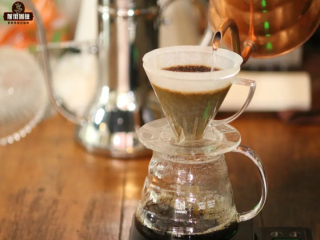
Relationship between extraction rate and concentration of hand-brewed coffee the solution parameters of insufficient extraction and over-extraction
Friends who learn to brew coffee by hand must understand the relationship between extraction rate and concentration. Understanding these two things is very helpful for future coffee brewing. First of all, we have to understand what is the main body of the extraction rate and concentration. The extraction rate refers to the percentage of the matter dissolved in water in the coffee bean itself.

Flavor description of Colombian Rosa coffee beans taste varieties treated by grinding scale
Flavor description of Colombian Rose Summer Coffee beans the suitable climate in Colombia provides a real natural pasture for coffee. Coffee trees in Colombia are mainly cultivated in the Andes, on steep slopes about 1300 meters above sea level, where the annual temperature is about 18 degrees Celsius, annual rainfall is 2000 to 3000 millimeters, and latitude 1-11.

Columbia Hope Manor Coffee Grinding characteristics Variety Flavor description Taste introduction
The main varieties of Colombian coffee are small grains of coffee. Plants are small trees or large shrubs, 5-8 m tall, usually much branched at base; old branches gray-white, nodes dilated, young branches glabrous, compressed. Leaves thinly leathery, ovate-lanceolate or lanceolate, 6-14 cm long and 3.5-5 cm wide, tip long acuminate, acuminate part 10-15 mm long, base cuneate or slightly obtuse, rarely rounded, entire or

Hierarchical and full Columbia exquisite boutique coffee bean planting situation, geographical location, climate sea
The suitable climate in Colombia provides a real natural pasture for coffee. Coffee trees in Colombia are mainly cultivated in the Andes, on steep slopes about 1300 meters above sea level, where the annual temperature is about 18 degrees Celsius, annual rainfall is 2000 to 3000 millimeters, latitude 1-11 15 north, longitude 72-78 west, and the specific range of elevation can exceed 2.000 meters. By

Hierarchical and full Columbia exquisite boutique coffee bean flavor, taste and aroma description, Jane
Origin: na Linglong altitude: 1860 m-2220 m processing: washing harvest time: April-June (75%), October-February (25%) varieties: new Kaddura species, Castie baking degree: CITY+ flavor features: roasted almonds, lemon and orange, white chocolate, honey, peach, round body, long aftertaste, balanced annual rainfall of 2000 to 3000 mm, north latitude 1
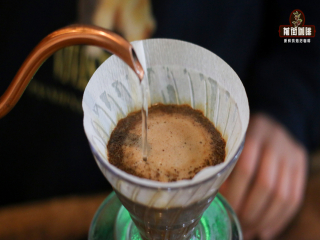
The brewing time of hand-brewed coffee is recommended as a tutorial: how long does it take to make a cup of hand-brewed coffee?
To communicate with professional baristas, please follow the steps of the coffee workshop (Wechat official account cafe_style). Use a small amount of hot water, warm the filter cup and the glass pot, and heat the required water to close to boiling. Wet filter paper put the filter paper into the filter cup, simply wet the filter paper with hot water and then discard the hot water

The taste of Colombian coffee introduces the characteristics of Colombian boutique.
The main varieties of Colombian coffee are small grains of coffee. Plants are small trees or large shrubs, 5-8 m tall, usually much branched at base; old branches gray-white, nodes dilated, young branches glabrous, compressed. Leaves thinly leathery, ovate-lanceolate or lanceolate, 6-14 cm long and 3.5-5 cm wide, tip long acuminate, acuminate part 10-15 mm long, base cuneate or slightly obtuse, rarely rounded, entire or

Columbia Coffee Manor with Sweet Flavor characteristics of Fine Coffee beans
The main varieties of Colombian coffee are small grains of coffee. Plants are small trees or large shrubs, 5-8 m tall, usually much branched at base; old branches gray-white, nodes dilated, young branches glabrous, compressed. Leaves thinly leathery, ovate-lanceolate or lanceolate, 6-14 cm long and 3.5-5 cm wide, tip long acuminate, acuminate part 10-15 mm long, base cuneate or slightly obtuse, rarely rounded, entire or

Grinding scale of Colombian coffee beans introduction to the taste of manor with variety treatment method
The main varieties of Colombian coffee are small grains of coffee. Plants are small trees or large shrubs, 5-8 m tall, usually much branched at base; old branches gray-white, nodes dilated, young branches glabrous, compressed. Leaves thinly leathery, ovate-lanceolate or lanceolate, 6-14 cm long and 3.5-5 cm wide, tip long acuminate, acuminate part 10-15 mm long, base cuneate or slightly obtuse, rarely rounded, entire or

A brief introduction to the Variety treatment method for describing the Flavor of Coffee in Santa Rita Manor, Colombia
Coffee workers go up the mountain to pick coffee beans (also known as coffee cherries) by hand, so they can pick carefully and pick the most ripe and full fruits. The vast majority of Colombian coffee beans are water-washed and moderately roasted with a light, silky and sometimes sour taste, which is not as strong as Brazilian coffee and Italian Expresso and is known as green.